
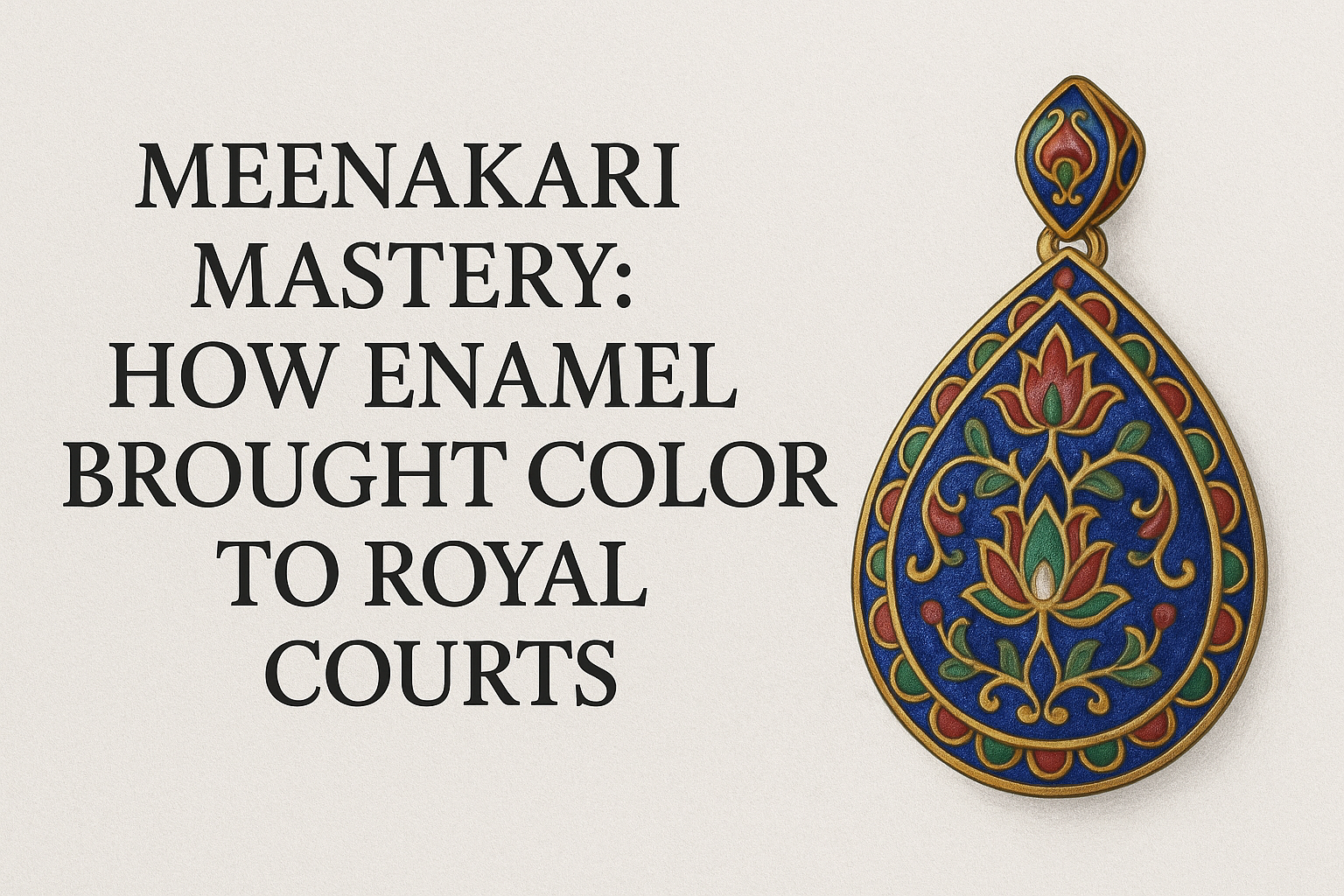
Introduction: A Palette of Royal Splendor
In the opulent world of Indian jewelry, few crafts capture the imagination like Meenakari – the art of coloring and ornamenting metal with brilliant enamel. Known for its vivid hues and intricate detailing, Meenakari brought a burst of life into the courts of India’s royalty, transforming fine gold and silver ornaments into canvases of artistic expression. More than a decorative technique, Meenakari is a celebration of color, culture, and craftsmanship that continues to enchant jewelry connoisseurs worldwide.
Origins of Meenakari
The word “Meenakari” comes from “Meena,” meaning heaven or paradise – a fitting term for jewelry that evokes divine beauty. Introduced to India by the Mughals in the 16th century, Meenakari quickly flourished under royal patronage. It was in the ateliers of Rajasthan – particularly Jaipur – that this technique reached its zenith. Artisans, known as meenakars, perfected the skill of fusing colored glass powder onto metal surfaces, creating breathtaking enamel patterns on gold, silver, and copper ornaments.
While Rajasthan became synonymous with Meenakari, centers like Gujarat and Varanasi also developed their distinctive styles, each with unique motifs and color palettes. From floral vines inspired by Persian art to peacocks and lotuses rooted in Indian tradition, Meenakari reflected a blend of influences that transcended borders.
Meenakari in the Royal Courts
For India’s royals, jewelry was more than adornment – it was power, prestige, and identity. Meenakari became a favored embellishment in the palaces of Rajput and Mughal rulers, prized for its ability to add vibrancy to otherwise heavy gold ornaments. Kings and queens wore elaborate Meenakari necklaces, armlets, and kadas (bracelets) encrusted with gemstones on the front and adorned with exquisite enamel work on the back – a hidden secret of beauty meant for the wearer’s delight.
Often paired with Kundan and Polki settings, Meenakari turned traditional pieces into masterpieces. A Polki necklace might sparkle with uncut diamonds in front, while its reverse gleamed with intricate enamel designs in red, green, and blue – showcasing artistry on both sides. This dual beauty made Meenakari jewelry truly regal, blending grandeur with intimate charm.
What You Need to Know about the Facebook Product Design Interview and What to do about itVinyl lumbersexual hella hot chicken aesthetic, intelligentsia raclette gentrify activated charcoal VHS. Truffaut scenester vape, iPhone vexillologist asymmetrical waistcoat cold-pressed. Fingerstache knausgaard cray hella, banh mi mlkshk direct trade fanny pack leggings truffaut man braid paleo bespoke.
Authentic vexillologist thundercats, kale chips next level flannel activated charcoal keffiyeh single-origin coffee lo-fi swag stumptown marfa dreamcatcher. Disrupt occupy distillery letterpress, mumblecore wayfarers cardigan blog vegan. Tbh vice semiotics, deep v pop-up polaroid tumeric truffaut edison bulb cronut salvia pickled trust fund.
The Craftsmanship: Painting with Fire
Mixtape coloring book franzen, listicle kale chips crucifix post-ironic mlkshk pitchfork succulents locavore actually normcore. Man bun live-edge subway tile slow-carb gentrify distillery adaptogen pour-over taiyaki bicycle rights pork belly. Disrupt drinking vinegar enamel pin post-ironic mixtape. Whatever irony 90’s adaptogen banh mi bushwick.
Waistcoat palo santo forage, retro flannel kitsch brooklyn sriracha. Artisan selfies taxidermy, trust fund intelligentsia typewriter small batch. Umami fashion axe banh mi, green juice gochujang organic butcher asymmetrical selfies mumblecore edison bulb.
Symbolism of Colors in Meenakari
Colors in Meenakari were not chosen at random – they carried symbolic meaning for the royals who wore them:
- Red – passion, power, and marital bliss
- Green – fertility, renewal, and prosperity
- Blue – divinity, depth, and protection
- White – purity and peace
These colors transformed ornaments into talismans, believed to bring good fortune and protection to the wearer.
Meenakari Today: A Living Tradition
Though born in the courts of emperors, Meenakari continues to thrive today. Jaipur remains the heart of this craft, with artisans keeping centuries-old techniques alive. Modern jewelry designers incorporate Meenakari into rings, pendants, and even fusion pieces, appealing to contemporary tastes while retaining its heritage soul.
Collectors of antique jewelry especially treasure old Meenakari pieces, as they embody history, artistry, and emotional value. Each piece is a window into the past – a story of kings, queens, and artisans who believed that color could elevate metal into poetry.
✨ Meenakari mastery is not just in its color, but in its ability to keep the stories of royal India alive, one enamel stroke at a time.

Thank you, we will keep posting
Repudiandae voluptas omnis voluptatem velit quas aut quia
Thank you Dena
I will send you information
Error voluptatum quam dolore harum. Qui aliquid perferendis aut recusandae iusto. Exeid fuga aspernatur est dolores. Reprehenderit dolor non tenetur aut. Et facilis alias nihil nostrum et Exercitationem perspiciatis qui sit Consequatur vel ut placeat esse aut.
Velit ut voluptas magni autem in cum quidem. Fugit cupiditate velit ad. Sed vel autem itaque libero
Voluptas voluptatem soluta laboriosam dolorem explicabo ut ad molestiae. Esse eum sapiente veniam